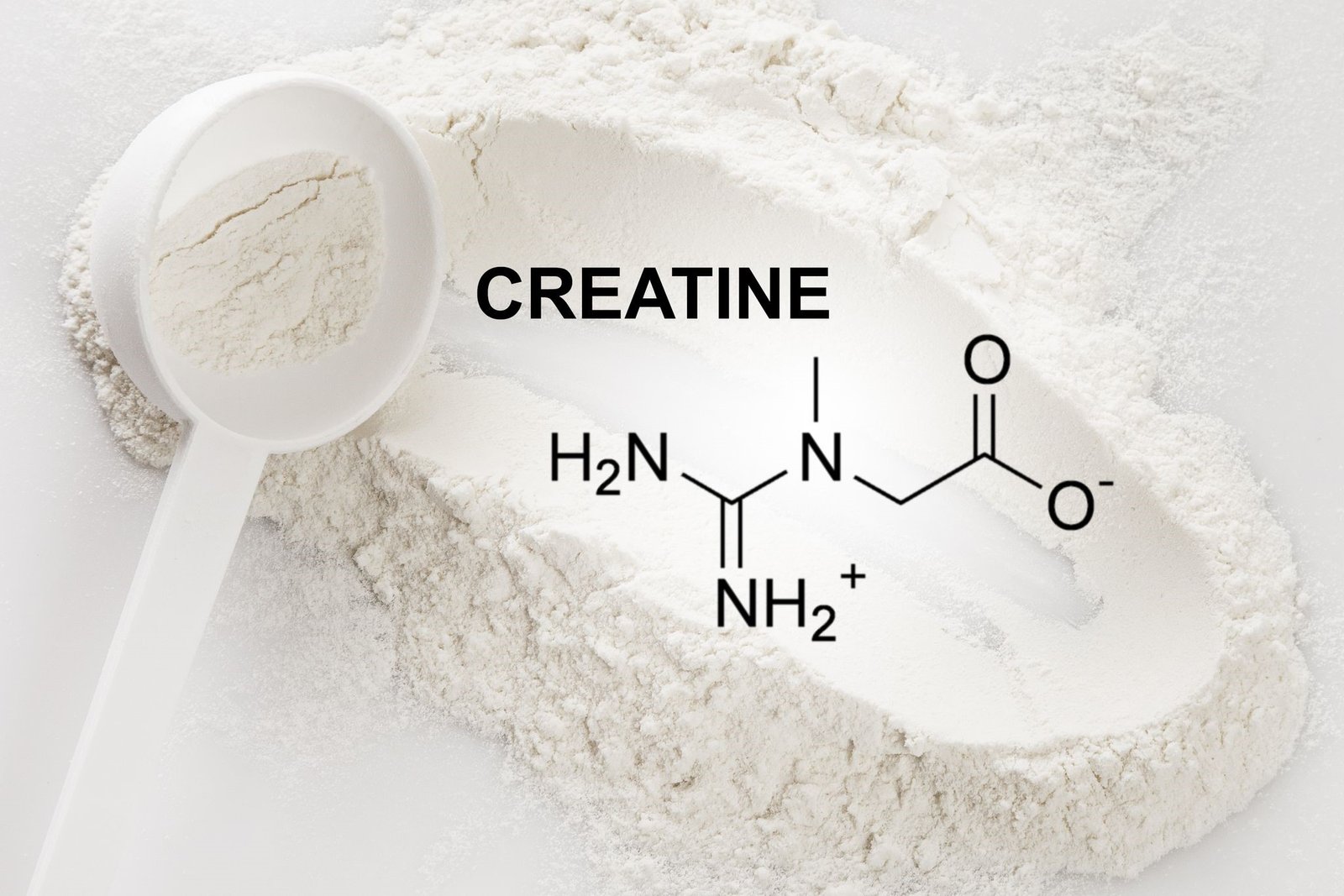
Introduction: Creatine Monohydrate, a nitrogen-containing compound, has gained significant attention as a popular supplement among athletes and fitness enthusiasts. This guide explores the structure, working mechanism, benefits, and optimal usage of Creatine Monohydrate to help you make informed decisions about its incorporation into your fitness regimen.
Understanding Creatine Monohydrate:
Creatine Monohydrate is not a true protein, yet it shares nitrogen-containing characteristics with proteins. This compound can be obtained from dietary sources like meat and fish, or produced within the body using specific amino acids like glycine, arginine, and methionine.
How Creatine Monohydrate Works:
Creatine plays a pivotal role in the phosphagen energy system, serving as the primary source of ATP (adenosine triphosphate), the primary energy currency of our bodies, during short-term, high-intensity activities. The compound exists in both free form and as phosphocreatine (PC), acting as a “high energy phosphate” reservoir.
PC aids in replenishing ATP during rapid muscle contractions by donating a phosphate group to the ADP (adenosine diphosphate) formed from ATP hydrolysis, providing energy for muscle contraction. When creatine stores are depleted, our short-term, high-intensity energy system falters, impacting muscle force generation.
The use of Creatine Monohydrate as an ergogenic aid is based on the concept of enhancing muscle creatine saturation through supplementation, which potentially boosts the phosphagen system’s capacity, thereby improving performance during short, intense exercises.
Benefits of Creatine Monohydrate:
Extensively researched, Creatine Monohydrate offers several proven advantages:
- Increased Muscle Creatine Levels: Research indicates that effective Creatine Monohydrate supplementation can lead to 10-40% increases in muscle creatine and PC stores. Achieving this requires an initial loading protocol followed by consistent dosages.
- Enhanced Work Capacity and Training: The compound proves to be one of the most effective legal supplements for improving anaerobic capacity and lean body mass. Studies suggest a 5-15% increase in strength and performance gains with proper Creatine Monohydrate usage.
- Greater Lean Body Mass: A substantial body of research indicates that Creatine Monohydrate supplementation contributes to noticeable gains in lean body mass, making it a valuable tool for building a stronger physique.
Optimal Usage of Creatine Monohydrate:
- Increasing Muscle Creatine Levels: Achieving effective muscle creatine levels requires a loading protocol. In this approach, consume approximately 0.3 g/kg/day of Creatine Monohydrate for 5-7 days (around 20 grams per day) and then transition to a maintenance phase of 3-5 grams per day.
- Timing of Supplementation: Contrary to popular belief, the timing of Creatine Monohydrate supplementation isn’t as critical as consistency. Recent insights suggest that post-workout consumption might be slightly more beneficial, but the overall focus should be on sustained usage rather than precise timing.
Conclusion:
Creatine Monohydrate’s significance as an ergogenic aid is well-established, backed by extensive research and documented benefits. Its role in enhancing high-intensity exercise capacity, increasing lean body mass, and improving overall training quality makes it a valuable addition to the toolkit of athletes and fitness enthusiasts alike.
By following a loading protocol and maintaining consistent dosages, you can harness the potential of Creatine Monohydrate to optimize your performance and achieve your fitness goals.

Add comment